August 30, 2025
Landscaping SEO: The Ultimate SEO Guide for Landscapers
Most homeowners start their hunt for landscaping services the same way they shop for pizza, plumbers, or patio furniture: they Google it.
If you don’t show up there? You’re invisible. And being invisible online means your competitors are cashing in while your phone stays quiet. That’s where Search Engine Optimization comes in. Done right, SEO puts your landscaping business front and center on Google, wins you more calls, and builds the kind of long-term credibility that word-of-mouth alone can’t deliver. The SEO strategies in this guide are the same ones I’ve used to help landscaping companies go from invisible online to booked out for months. I’m not sharing theory, I’m sharing what’s worked for me and my clients in real markets, against real competition.
Local SEO Is Everything

If someone in Denver Googles “landscaper near me,” they’re not hiring a company in Miami, no matter how many awards that Miami firm has. Local search is the name of the game.
Why it matters for landscapers:
- 80% of consumers go online to find local services. If you’re not showing up, you’re invisible to almost everyone.
- The top 3 local results grab 42% of clicks. That’s one-third of your potential clients gone if you’re not in that pack.
- Local searches aren’t window shopping. Someone typing “lawn care Austin” is basically waving their credit card in your face.
- Competition stays local. You’re only up against the guys down the street, not every landscaper in America.
Google Business Profile: Your #1 Local Tool
While your competition is still figuring out why their phones aren’t ringing, you could be collecting leads like it’s 2019 again. The secret weapon? That little Google Business Profile sitting there, probably gathering digital dust.
Here’s how I set it up for my clients:
- Pick “Landscaper” as your primary category.
- Add secondary categories like “Lawn Care Service” or “Garden Center.”
- Define your service area (don’t list the whole state if you only work 20 miles out).
- Upload before-and-after photos
- Use “Posts.” Share promos, seasonal services, or updates. It shows Google you’re active.
Other ways you can optimize your Google Business Profile.
NAP Consistency Across the Web
If your name, address, or phone number don’t match across every corner of the internet, Google gets suspicious. And when Google doesn’t trust you, homeowners don’t either.
- “Greenscapes LLC” vs. “Greenscapes, LLC”? That extra comma could hurt you.
So, keep it simple: same details, everywhere.
Citations & Reviews: Votes of Confidence
Want to supercharge your local presence? Build a trail of proof that says: “Yep, this landscaper’s legit.”
Citations are just mentions of your business name, address, and phone number on other sites.
I recommend starting with the heavy hitters:
- Bing Places
- Yelp
- Better Business Bureau
Once those are citations are done, I nudge clients to focus on reviews. Review signals account for 16% of local pack rankings. A landscaper with 47 five-star reviews will get the call over a landscaper with prettier trucks but zero reviews. Every. Single. Time.
Keyword Research (What Your Customers Are Actually Searching For)

Researching landscaping keywords isn’t rocket science. It’s more like planning the perfect garden bed. You need to know what grows well in your area, what your customers actually want, and how to make everything work together.
You might call it “xeriscaping.” Your customers? They’re typing “drought-tolerant landscaping” or “low water yard ideas.”
See the problem?
Start With What You Do
Before you touch a single keyword tool, grab a coffee and brain dump every service you offer. And I mean everything:
Core services:
- Lawn maintenance
- Landscape design
- Hardscape installation
Specialty work:
- Water features
- Outdoor lighting
- Retaining walls
Now here’s where it gets interesting.
Take those basic terms and run them through Google Keyword Planner or SEMrush.
These tools spit out search volumes, related terms, and this is the golden nugget: what people search for.
Local, Local, Local
Nobody searches for “landscaping services” and hires someone three states away. Your customers are searching for:
“Landscapers near me”
“[Your city] lawn care”
“Best landscaping company in [your town]”
Don’t just target your city. Hit the suburbs, neighborhoods, and surrounding areas you service.
Long-Tail Keywords
I’ve discovered that long-tail keywords like ‘small backyard landscaping ideas’ bring in fewer clicks but way more qualified leads than broad terms like ‘landscaping services.’
Some longtail keyword ideas:
- “Fire pit landscaping ideas”
- “How much does artificial turf cost?”
- “Native plants for clay soil”
Match Search Intent (Or Watch Your Rankings Tank)
This is where 90% of landscapers mess up their SEO.
They create one generic “Services” page and wonder why it doesn’t rank for anything.
Do this instead.
Informational Intent: They’re Just Looking
These folks are in research mode:
- “How to design a small backyard”
- “Best plants for full shade”
- “DIY landscaping ideas”
What to do: Create genuinely helpful blog posts. Share your expertise. Build trust.
Commercial Intent: They’re Shopping Around
These searchers are comparing options:
- “Landscaping company reviews [city]”
- “Landscape designer vs landscaper”
- “Average cost of backyard renovation”
What to do: Optimize your service pages. Show pricing ranges. Plaster those 5-star reviews everywhere. Include before/after photos that make jaws drop.
Transactional Intent: Shut Up And Take My Money
- “Hire landscaper today”
- “Emergency sprinkler repair [city]”
- “Book lawn mowing service”
Don’t forget to track which landscaping keywords bring in actual leads. This helps drive what content you write.
Create Content That Attracts Clients (Not Just Traffic)

Most landscaping websites read like they were written by robots for robots. Boring service descriptions. Stock photos from 2003. Generic “We care about your lawn!” messaging.
Your content needs to work harder than that.
Service Pages That Sell (Without Being Salesy)
Here’s how I write landscaping service page headlines that actually rank: I keep them clear, location-focused, and laser-targeted to what people type into Google.
Headlines That Don’t Suck
Forget clever. Go clear.
“Professional Lawn Care Services in Austin” beats “Green Dreams Lawn Solutions” every day of the week.
Why? Because that’s what people type into Google. And when they land on your page, they immediately know they’re in the right place.
Show Them What They’re Getting
Nobody wants to guess what “comprehensive lawn service” means.
Break it down:
- Weekly mowing and edging
- Fertilization schedule (4 applications per year)
- Weed control treatments
- Leaf removal (fall only)
- Basic shrub trimming
Price Transparency (Yeah, I Said It)
Every project is different. But give people something to work with:
- Basic lawn care: Starting at $50/visit
- Avg. Monthly Maintenance: $300
- Full landscape design: $2,500-$10,000
- Patio installation: $15-$40 per square foot
Even rough numbers qualify your leads. The bargain hunters bounce. The serious buyers call.
Before & After Photos (Show YOUR work)
Stock photos are content poison. Instead:
- Take pictures of your work.
- Use the same lighting if possible.
- No Instagram filters. Just no!
- Use high-resolution images.
Blog Posts That Drive Business
Seasonal Content That Ranks
Google loves fresh, timely content.
Write your “Spring Lawn Prep Guide” in January. Publish “Fall Cleanup Checklist” in August. By the time homeowners start searching, you’re already ranking on page one.
Problem-Solving Content That Converts
Target specific issues like:
- “Why Is My Grass Dying Under My Trees?”
- “How to Kill Weeds Without Killing Grass”
- “Drainage Solutions for Soggy Yards”
FAQ Posts That Answer Questions
Answer common questions like:
- “How much does landscaping cost?”
- “How important is irrigation in landscaping?”
- “What’s the difference between mulch types?”
Location Pages That Dominate Local Search
One “Service Areas” page with a list of cities?
That’s amateur hour.
One Page Per Location
“Landscaping Services in Plano” needs its own page. So does “Landscaping Services in Frisco.”
Yes, it’s more work. Yes, it’s worth it.
One of my landscaping clients added location pages, and their call volume jumped 28% in 45 days.
Make Each Page Unique (Or Google Will Punish You)
Instead of copying and pasting content, make each location page about that location:
- Mention local landmarks (“Serving homes near White Rock Lake”)
- Reference local challenges (“Dealing with North Dallas clay soil”)
- Include neighborhood names (“Servicing Highland Park, University Park, and Lakewood”)
Showcase Your Local Projects
Specific examples from specific locations.
“We installed this patio in Richardson last spring.”
“This drought-tolerant garden thrives in Plano’s heat.”
Include neighborhoods and zip codes if possible.
On-Page SEO – Optimizing Your Website (So Google Finds You)
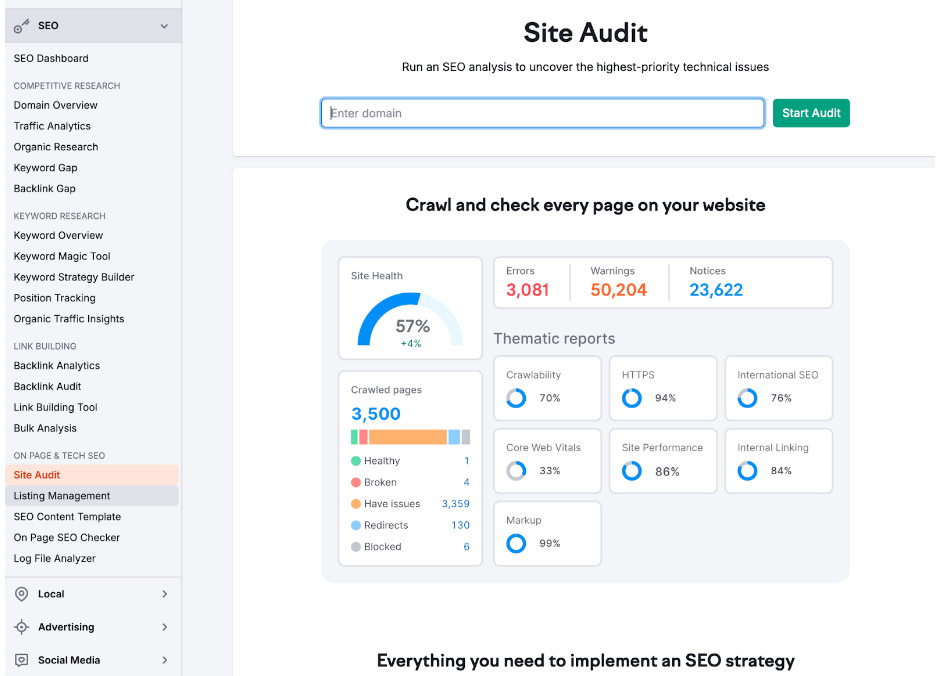
Your website might look gorgeous, but if Google can’t figure out what you do or where you do it, you’re basically invisible online.
That’s where on-page SEO comes in, the art of making your landscaping website irresistible to search engines while keeping it useful for actual humans.
Spoiler: It’s not as complicated as SEO “gurus” make it sound.
Website Design & User Experience
If someone can’t find your contact info or services within three clicks, they’re gone.
Structure That Makes Sense
Stop cramming everything onto one “Services” page like it’s a landscaping buffet.
Each service needs its own page:
- Lawn care gets a page
- Hardscaping gets a page
- Irrigation gets a page
Why? Because Google isn’t psychic. When everything’s mashed together, Google has no clue what you specialize in.
The winning structure:
- Homepage → Services → Lawn Care
- Homepage → Gallery → Patios
- Homepage → About → Our Team
Simple. Logical. Effective.
Think Mobile First (Your Customers Already Do)
Mobile isn’t optional anymore. It’s where 60% of your traffic lives.
Quick mobile fixes:
- Buttons need to be thumb-sized (at least 44×44 pixels)
- Text should be readable without zooming
- Forms should work on touchscreens
- No horizontal scrolling (ever)
On-Page Optimization Checklist (Copy This)
Write Title Tags Google (and Humans) Love
Bad: “Home – Bob’s Landscaping” Good: “Lawn Care Services in Dallas | Bob’s Landscaping”
Keep it under 60 characters or Google cuts you off mid-senten…
Include your main keyword naturally. Include your location if you’re targeting local searches.
Headlines That Guide
Your H1 is your main headline. One per page. Make it count.
H2s break up sections (like “Our Lawn Care Process”).
H3s handle subsections (like “Weekly Mowing Schedule”).
Content That Converts
Write like you’re explaining your services to a neighbor, not a robot.
Yes, include your keywords. No, don’t force them where they don’t belong.
“We provide landscaping services landscaping for all your landscaping needs” makes you look like you had a stroke.
“We transform Dallas yards with custom landscape designs that handle Texas heat” means something.
Images That Sell
Stop naming photos IMG_1234.jpg.
“backyard-patio-installation-plano.jpg” tells Google (and customers) exactly what they’re looking at.
Alt text isn’t optional: “Stone patio installation with outdoor kitchen in Plano backyard” beats “image” every time.
URLs That Make Sense
yoursite.com/landscape-design-dallas > yoursite.com/?page=48291
Use hyphens, not underscores. Keep it short. Include keywords that matter.
Meta Descriptions That Click
You’ve got 160 characters to convince someone to click. Make it click-worthy!
“Professional lawn care in Austin. Weekly mowing, fertilization, and weed control. Get a Free Estimate. Just call today!”
Technical SEO – Fix the Backend, Win the Rankings
Technical SEO is like your irrigation system; nobody sees it working, but everything falls apart without it.
Let’s fix it.
Site Speed (Or How to Stop Losing Customers in 3 Seconds)

Your website has exactly three seconds.
That’s it. Three seconds before visitors bounce to your competitor’s site.
Think that’s harsh? Put yourself in their shoes. You’re researching landscapers on your phone, probably while standing in your disaster of a backyard. A slow site isn’t just annoying, it’s a deal-breaker.
Compress Images
Compress all images before uploading. Use tools like TinyPNG to reduce file sizes without losing quality. Your portfolio stays stunning but loads faster.
Learn other ways to speed up your website.
HTTPS Security (The Trust Badge You Can’t Ignore)
See that little padlock in your browser bar? That’s HTTPS. Without it, browsers literally warn visitors your site might be dangerous.
“This site is not secure” isn’t exactly a trust-builder for a business you’re inviting to your home.
Plus, Google straight-up prefers secure sites. It’s a ranking factor. No HTTPS = lower rankings.
The fix: Call your hosting provider. Say “I need an SSL certificate.” Most offer them free now. Installation takes minutes. Problem solved.
XML Sitemaps (Your Website’s GPS for Google)
Your sitemap is literally a map of your website that tells Google where everything lives.
Without one, Google has to discover your pages by following links. With one, you’re handing them a complete directory. This takes 10 minutes and helps Google find every service page, blog post, and gallery on your site.
Building Authority With Off-Page SEO (Without Buying Sketchy Links)

Here’s what nobody tells you about landscaping SEO: you could have the perfect website, but if nobody’s talking about you online, Google assumes you’re nobody.
How to Build Backlinks That Google Cares About
Buying 1,000 backlinks for $50 on Fiverr is a quick way of getting your site penalized by Google.
Quality will beat quantity. Every. Single. Time.
Guest Blogging Done Right
Offer real value:
- “How Texas Drought Affects Foundation Landscaping” for home improvement blogs
- “Curb Appeal ROI: A Landscaper’s Guide” for real estate websites
- “Native Plants That Survive Dallas Summers” for gardening sites
Make sure each article naturally mentions your business. Don’t force it. Just be helpful.
Local Partnerships That Pay Off
Real estate agents: They need curb appeal tips. Write a “New Homeowner’s Landscaping Checklist” for their website.
Garden centers: Get listed as their preferred installer.
Home improvement stores: Teach a weekend workshop. Get featured on their events page.
Chamber of Commerce: Join. Participate. Get that member directory link. It’s local SEO gold.
Partnering with local chambers and suppliers has worked every single time I’ve tried it. Those backlinks always outperform random directory links.
Directory Submissions (The Right Ones)
Most directories are garbage. But a few still matter:
The Big Three:
- Google Business Profile (obviously)
- Yelp (like it or not)
- Angie’s List/Angi
Industry-Specific:
- Houzz (for design-focused landscapers)
- Better Business Bureau
- Local contractor directories
Keep your NAP (Name, Address, Phone) identical everywhere. Even tiny differences confuse Google.
Get Your Content Seen (It Won’t Promote Itself)
Creating great content without promotion is like planting seeds without water.
Social Media That Generates Leads, Not Just Likes
Stop posting stock photos of perfect lawns.
Post what gets engagement:
- Before/after transformation videos
- Time-lapse of installation projects
- Common lawn problems you’re fixing
- Seasonal tips specific to your area
Email Outreach Without Being Annoying
Your network is bigger than you think.
Send monthly emails to:
- Past clients
- Suppliers
- Real estate partners
- Local business network
Share one useful thing. Include one link. Don’t sell. Just help.
Local Media (Easier Than You Think)
Local news is desperate for content. Seriously desperate.
Pitch ideas like:
- “Preparing Gardens for Unusual February Freeze”
- “Drought-Resistant Landscapes Saving Water in [City]”
- “Local Landscaper Creates Healing Garden for Hospital”
One local news mention can drive more authority than months of link building.
Contact the reporter who covers home/garden topics. Send a two-paragraph pitch. Include photos. Make their job easy.
Forum Participation That Doesn’t Feel Slimy
Reddit, neighborhood Facebook groups, and landscaping forums are full of people asking questions you can answer.
Someone asks about dead grass? Give real advice. Mention you wrote a detailed guide (with link) only if genuinely helpful.
Tracking, Monitoring & Continuous Improvement

The difference between landscapers who dominate local search and those who don’t? The winners track what works.
The Only Tools You Need (And They’re Free)
Forget the fancy $300/month SEO tools. You need exactly two things to start:
Google Analytics: Shows who visits your site and what they do Google Search Console: Shows how people find you on Google
That’s it. Free. Powerful. Everything you need to know if your SEO is working or wasting time.
Takes 10 minutes to set up. Saves you thousands in wasted effort.
Track Leads and Calls, Not Pageviews
“We got 10,000 visitors!”
Cool story. How many called you?
Track conversions, not clicks:
- Phone calls from your website (use call tracking)
- Contact form submissions
- Quote request forms
- Consultation bookings
- Email signups
Set up goal tracking in Google Analytics. Every form submission, every phone click, every quote request, track it all.
Why? Because knowing that “lawn care Dallas” brings 5 calls while “landscaping Dallas” brings zero changes everything about your strategy.
Monthly Monitoring That Takes 30 Minutes
You don’t need to stare at analytics daily. Once a month is plenty.
Your 30-minute monthly checkup:
Check local rankings:
- “Landscaper near me” – Where do you rank?
- “[Your city] lawn care” – Moving up or down?
- Your top 5 service keywords – Any changes?
Review organic traffic:
- Increasing? (Good)
- Is it flat? (Work on it)
- Is it dropping? (Fix it now!)
Check your conversion rate:
- 100 visitors, 5 leads = 5% conversion
- Below 2%? Your site needs work
- Above 5%? You’re crushing it
Calculate cost per lead:
- SEO hours invested × hourly rate = SEO cost
- SEO cost ÷ leads generated = cost per lead
- Compare to PPC costs (SEO usually wins long-term)
Your Monthly Tracking Dashboard
| Metric | Why It Matters | Red Flag |
| Local rankings | Shows visibility | Dropping positions |
| Organic traffic | More eyeballs | Declining trend |
| Conversion rate | Efficiency metric | Below 2% |
| Phone calls | Direct business | Fewer than last month |
| Cost per lead | ROI measurement | Higher than PPC |
Adjust Based on Reality (Not Hunches)
Data tells stories if you listen.
High traffic, low conversions? Your content attracts visitors but doesn’t convert. Fix your calls-to-action. Add phone numbers everywhere. Make contact forms simpler.
Good rankings, no traffic? You’re ranking for keywords nobody searches. Shift focus to higher-volume terms.
Lots of calls, few bookings? SEO is working but sales process isn’t. That’s not an SEO problem.
Blog posts crushing service pages? People want information before hiring. Add stronger CTAs to blogs. Link to service pages.
The Snowball Effect: How Small SEO Builds Momentum
SEO isn’t a sprint. It’s not even a marathon. It’s like growing a tree.
Month 1: Tiny improvements Month 3: Starting to see growth Month 6: Real momentum Month 12: Crushing competitors
Small improvements compound:
- Fix one technical issue monthly
- Add one quality page monthly
- Build 2-3 good links monthly
- Optimize one old page monthly
These stack. Compound. Multiply.
The landscapers I’ve worked with consistently saw results, more calls, more booked jobs within the first 90 days of steady SEO.
Turning SEO Into Growth For Your Landscaping Business
SEO works for landscapers who do the work.
Not the ones who read about it. Not the ones who “plan to start next month.” The ones who execute consistently.
Check monthly. Adjust based on data. Repeat forever.
The Uncomfortable Truth
Your competitors are either doing this or they’re not.
The ones who are? They’re booked through next season.
I’ve watched landscapers double revenue in 12-18 months with consistent SEO. Not magic. Not overnight. Just steady execution of everything we covered.
Your Move
Pick one thing:
- Fix your Google Business Profile (2 hours)
- Research 10 keywords (1 hour)
- Write one helpful blog post (90 minutes)
Start today. Not tomorrow. Not next week. Today.
If you want to stop guessing and get a clear SEO plan for your landscaping business, let’s connect. I’ll walk you through exactly how to get your phone ringing.

Joel Casarez | SEO Consultant
Joel is an SEO consultant with over 14 years of experience. He utilizes his experience as a search marketing expert to share tips, tactics, and best practices on SEO and PPC. When not assisting businesses in growing online, he loves to travel, listen to podcasts, and watch stand-up comedy.
